
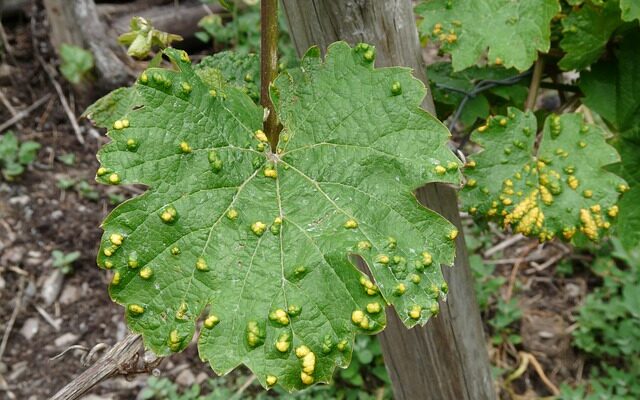
In today's article we speak widely of plants mites, to help you discover everything that is needed on these parasites. You will find out which mites are, what is the way they attack plants, but also what methods can be fought. In this sense, we offer you a top with the best mite, as well as some recommendations for the efficient use of acaricides in the fight against mites in agricultural crops.
What are mites?
One of the greatest categories of plants parasites are mites. They can attack both field crops and gardens, orchards, greenhouses and even apartments plants. Mites' attacks are more intense during the summer, as they multiply this season. Plants mites are a kind of small insects, difficult to see with the naked eye, they are like small spiders. The size of the mites do not exceed half a millimeter. Since they have several generations per year, they are dangerous for the cultivation of fruit, plant culture, technical plants, floriculture and viticulture, but also have a danger to livestocks.
Plant winter mites in the form of eggs or adults. The first attacks of mites can occur in spring, but significant damage occur more often in summer, when temperatures are high and multiplication cycles are short. There may be about 7-8 generations of mites per year. Due to their small size and symptoms that are not immediately visible, sometimes it can be difficult to detect the attack of mites to crops, which is why the treatments are often made, when the infestation is already strong.
There are different types of herbal mites and the most common we will present below.
The common red spider
Known as Tetranychus OrticaeThe common red spider is a polyphaga species, which attacks tomatoes, cucumbers, aubergines, screws, corn, soybeans, fruit trees and ornamental plants. The leaves attacked by the common red spider become the white-gray and the sidewalk. This parasite is wintering as an adult on plants and vegetable debris.
The red spider of the trees
The red spider of the trees, called A Nonycus UlmiAttack various fruits and screws. Winter like an egg on the cortex of trees. It points the leaves and sucks the sap, which affects the normal nutrition of the fruits. The final result of the attack is that the leaves fall and the fruits remain small.
The wide spider
Called Polifagotarsonemus sideThe large spider attacks a large number of plant species, especially in greenhouses and solarium. It is located on the lower face of the leaves, on flowers of flowers and fruits. The attached organs of the plant are depigs and their fruits remain small, without being able to be marketed.
Mites of Eriophisi screws
Have the name Eriophyes Vine, Calepitrimerus VineThe mites of the eerify of the screws point the plants, which causes the deformation of the green organs and the drying, in the end. Due to the attack of these mites, the productions are drastically affected and the hubs are at risk of freezing in winter. In the case of strong attacks, the control is extremely difficult and is limited to maintaining the economic threshold.
What are the signs of mites infestation?
Mites are active only during the summer and in the rest of the year in hibernation in the ground. They give their eggs in the ground and can resist up to up to 5 years, waiting for the favorable conditions to hatch. During the summer, however, the populations of mites multiply extremely repeated, since a single copy requires only 15 days to reach the adult phase. And once you leave hibernation, mites attack plants in their immediate vicinity, but can migrate to other areas, if they are worn by gusts. Starting from this moment, mites can occur everywhere and can infest all plants. Here are the main signs of the mites of mites:
- The appearance of yellow spots, sometimes and some holes, on the surface of the leaves
- The appearance of small bumps of the white spider at the base of the stem and the leaves
- The leaves attached dry and fall, and young people take place on the edge
- Plants restart increasing
How can you detect the existence of mites on herbs?
The mites are extremely small, which makes it almost impossible to detect them with the naked eye. However, there are ways to find out before it's too late, so you can use appropriate acaricide treatments in advance. This method is to use a magnifying glass to analyze the surface of the plant. Another simpler method is the positioning of a white sheet under the plant you want to control, followed by the easy shock of the plant. If there are mites on the plant, they will fall on paper, where they will be easier to see.
Top 3 Autor recommended for the treatment of mites
There are various acaricides that you can use to fight mites. We present among the first three of the best recommended mites as a treatment to protect crops from mites.
Insecticide Envidor 240 SC
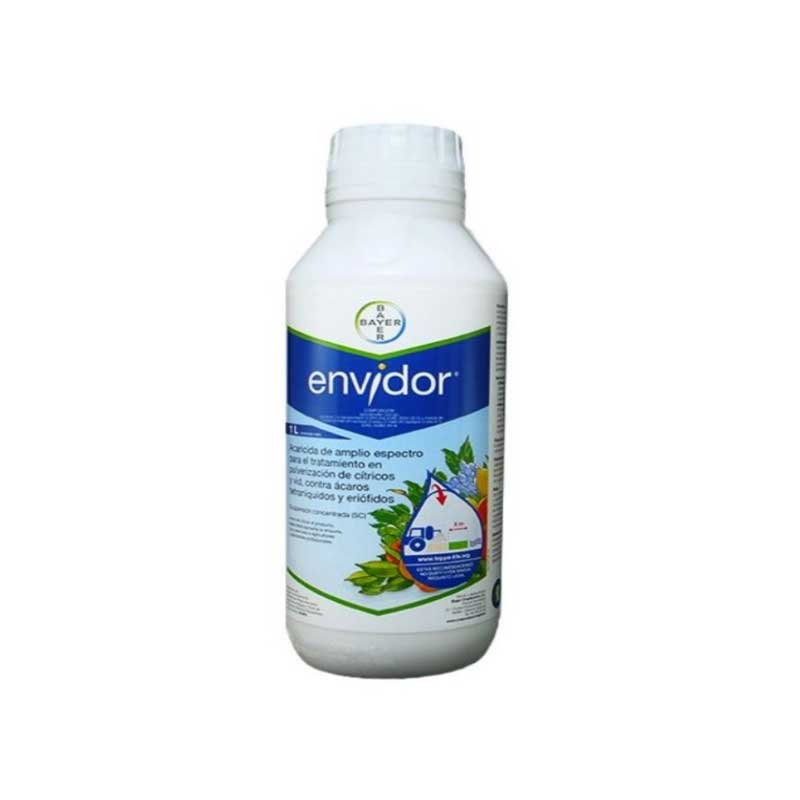
Insecticidul Envidor 240 SC It is an acaricide with action through contact and ingestion and a large spectrum of struggle. Its action is strong and controls all the youth phases of larvae and nymphs. In addition, it drastically reduces the fertility of females. It is a lipophile acaricide, that is, it is fixed in the ceric layer of the cuticle, it is not washed by rainfall and its action is not influenced by high temperatures. It has a protection time of about 40 days after application. He fights mites in the culture of apples and vines. It is recommended to apply this acaricide during the period between the opening of the bocciolo and the inflorescence completely developed or during the grains growth period and the softening of their skin.
Milbeknock insecticide
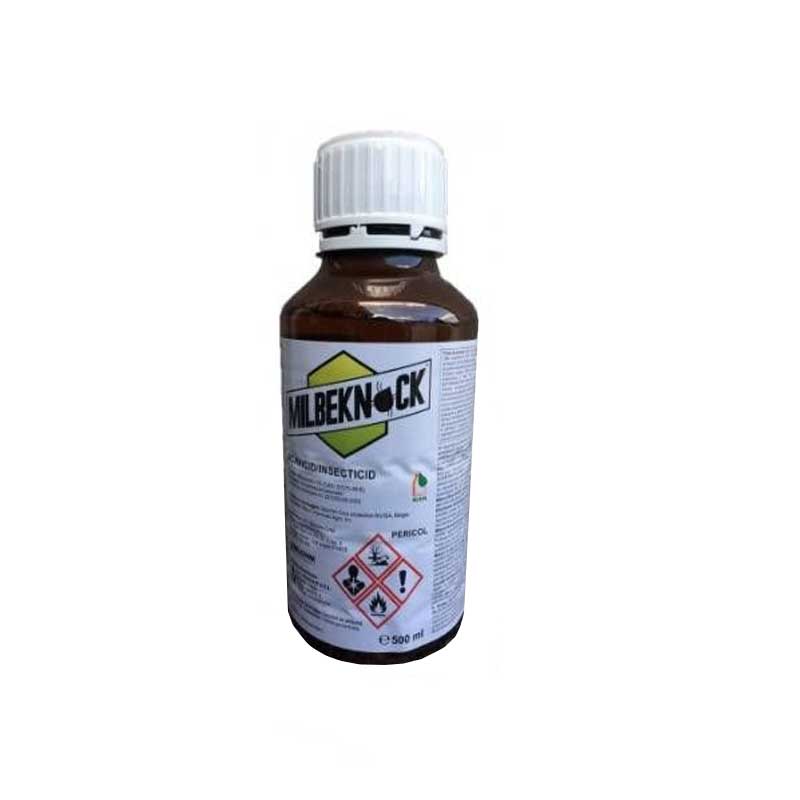
Insecticidul Milbeknock It is an insect-assocalicide that protects cultures, the environment and man. Its action is translaminar. This acaricide is not influenced by the rains that occurred within a few hours of the application. Its way of action is unique and different from that of conventional acaricides, since insects that come into contact with the substance die without presenting any movement or spasm. It is effective for a large spectrum of mites and fights all their development phases. It has a residual activity of about 40-50 days. It is not influenced by the temperature level when applied.
Nissorun 10 WP
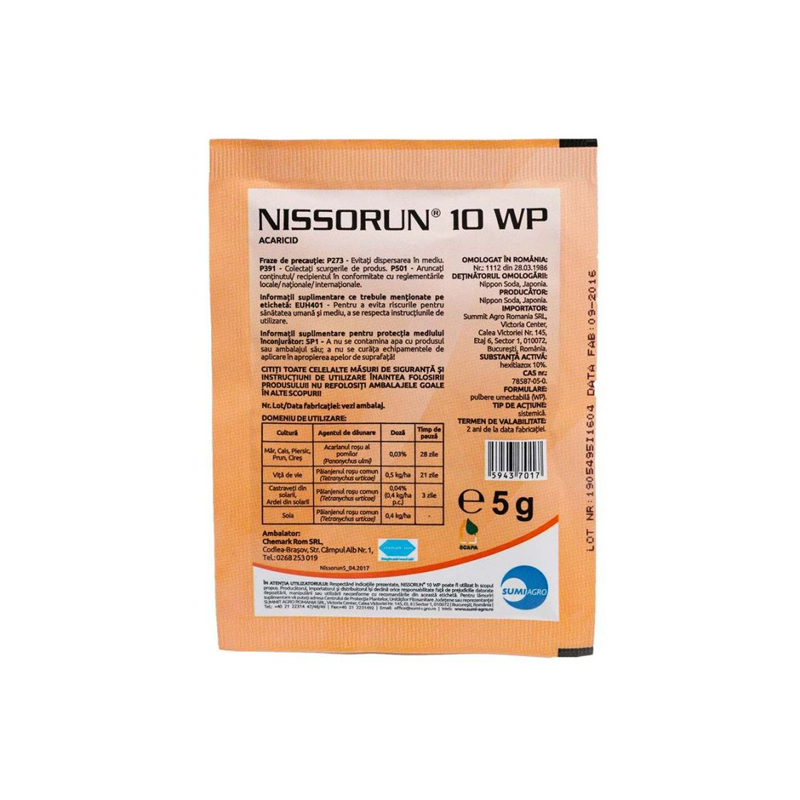
Nissorun 10 WP It is an insecticidal acid that contains 10% Hexitiazole and has humbleable forms of dust. It is an effective treatment for aubergines, cucumbers, apple, plum, apricot, fishing, cherry and screws. It is very useful for fighting the red spider, the common spider, the yellow spider and eryphic spiders. It has a translaminic effect, fighting spiders on both sides of the leaves. If adults came into contact with the substance, their eggs become sterile. This acaricide has a residual activity of over 40 days and is not influenced by the rainfall that occur after the solution has dried on the plant.
Tips for the fighting of effective mites
Each mite is provided with certain recommendations on how to use, as well as on the period that must go between sprinkling and collection. It is essential to pay particular attention to these instructions, to make sure that the product used guarantees the efficiency you are waiting for and that you use the safe product.
Generally splashes with acaricide It can be performed in a period of three weeks between the splashes, but this can differ according to the product used. During the summer, they can be made spray With acaricides once every two weeks.
Conclusion
Mites are small parasites of plants, but which can cause significant damage in agricultural crops. Due to their small size, they are not always observed in time, so the treatment is often performed late. Therefore, it is important to know which mites are attacking the plants, in order to apply the necessary treatments with mites, in order to keep crops, away from the attacks of the mites.
latest posts published

Thyme – Everything you need to know about Timo

Modern agriculture with the help of industrial drones

Lavender culture. Rules of treatment to obtain a rich harvest

What are the machines that serve to alleviate agricultural work?

What prevention methods should you apply when using the total herbicide?

How many types of fertilizers are there and when do you have to use them?

The complete guide to the preparation of the garden in the cold season

The main agricultural works in July

Fodder Beet – Everything you need to know about its cultivation
