
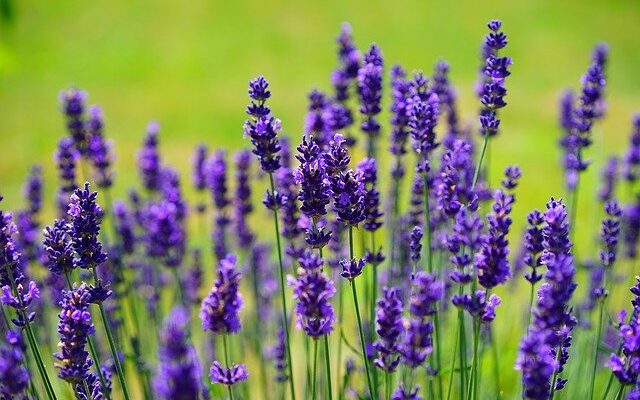
The culture of lavender can become a profitable activity for both farmers and entrepreneurs or gardening entrepreneurs. Lavender is often grown for the benefits offered by the products obtained by this plant. Lavender is a perennial plant, which is rarely attacked by parasites. Since it is considered a niche business, lavender is often grown on small areas.
You can make a profit by cultivating lavender in various ways. For example, the sowing material (cuttings) can be sold both to the future owners of plantations and to the people who want to cultivate a lavender bush in their garden. Another way to make a profit is the sale of lavender flowers.
In the first three years after sowing, the production is smaller, for a total of 2-3 tons of fresh flowers per hectare. In 5-6 years, production can also reach 10 tons per hectare. The lavender plantation enters the fruit since the third year. It is recommended that in the early years the flowers are not forced.
How to plant lavender?
To cultivate lavender, it is necessary to satisfy some conditions. The most important factors for a lavender culture that will last many years are soil and climate. The ideal soil for the growth of lavender is composed of 45% minerals (sand, mud and clay), an organic matter of 5% and 50% of porous space. In order for lavender to grow, it is necessary for land with a pH of about 7.0 and well drained.
Lavender needs an exposure to the sun of at least 6-8 hours a day. Lavender prefers the warm and moderately dry climate, not very cold winters and hot summers. Lavender comes from Mediterranean countries, where medium temperatures from 20 to 30 degrees Celsius in the spring and summer months. Therefore, the plant is stimulated to regenerate and increase after the harvest when the ground temperature is about 18 degrees Celsius. However, although they prefer high temperatures, lavender also tolerates low temperatures. On the contrary, the high humidity can favor the appearance of the mushrooms, which dry the leaves and lavender gems.
The culture of lavender can be obtained from seeds and cuttings. Regardless of the chosen version, the plants are placed in files at a distance of 40-65 centimeters, depending on the variety. The distance between the files varies between 120 and 150 centimeters. If lavender is planted in high altitude soil, the plants must be placed closer to each other, to be protected by the wind. In conditions of humidity, it is recommended that the plants are at a distance greater from each other, to allow the air to circulate.

Cultivation of lavender – Working work of lavender culture
Once the lavender has been planted, it is necessary to perform some cure works, so that the plant grows magnificently. These works that are included in the cultivation of lavender include irrigation, maintenance cuts and ways to combat diseases and parasites.
Watering
Immediately after sowing, whether it was made with seeds or cuttings, lavender must be watered. The lavender barely planted requires more water of the ripe plant, to develop a strong radical system. About two years after sowing, mature lavender plants can only live with water from rainfall, if the annual rain exceeds 450 mm per square meter.
In areas where there are no frequent rains, it is advisable to invest in a Irrigation systemBecause, if the plant does not receive enough water during the flowering period, the gems will not develop. In very hot and rain-free areas, 3-4 irrigation sessions are recommended in the summer months. In other areas, you can install a drop irrigation system, to be used for 20 minutes, once a week.
It is recommended to drip irrigation, since other irrigation methods can damage flowers. In addition, lavender roots are slightly rotten and are subject to fungal infections. For this reason, irrigation is performed when the ground is dry.
Maintenance cuts
To grow and protect the plant, maintenance cuts are required. The first cut is performed in the first growth season, when the first gems bloom. This cut aims to help the plant develop. So the cut is required once a year. Although the plant can be cut and spring, in general, maintenance is performed towards the end of the summer or at the beginning of autumn, after the collection. Especially in the varieties raised for the oil, those to which only the flowers are collected, about a quarter of the plant are cut, without reaching the wood part of the plant.
Fight diseases and parasites
Lavender production can be influenced by weeds, as they compete with lavender for the sun, water and nutrients. Plants can also be influenced by insects or diseases.
Here are the main parasites that can influence the culture of lavender:
- Scazziani Ceropoids. Spring is visible and secrete a substance similar to vegetable saliva. Although their secretion is aesthetically unpleasant, they do not threaten the health of the plant. These parasites can be removed by applying pesticides or other chemical treatments.
- Arrodidae muscles. They feed on a lymph of lavender and can influence the development of the plant. They are small and white insects that can be found under the leaves. When present in large numbers, the plant can yellow and proclaims. There are no insecticides against them, but they can be manually removed from the leaves or by a sheet or mulch, to remove these muscles.
- Aphidoid insects. Although these insects are not directly harmful to plants, they can transmit the mosaic alfalfa virus, a virus that causes yellow spots on leaves and vlastries. Sometimes the interested fabric tightens and changes shape. In general, the virus does not kill plants, but prevents their growth and flowering. In order to prevent the propagation of the virus, infected plants must be removed and burned. On the contrary, to prevent infection, it is recommended to use a insecticide Against apidoid insects, as well as the frequent cleaning and sterilization of gardening tools.
- Mushroom Phomopsis Lavandula. This destroys lavender stems. When lavender plants are infected with this mushroom, suddenly wander, even when it is not a dry year. It is recommended to use a wolf to see if there are small black points on the cortex, as they show an infection with this mushroom. To remove the mushroom, the plants concerned must be removed and burned.
- Mushro of Septoria Lavandula. Infect the surface fabrics of the lavender leaves. Septoriza appears due to the humidity that is formed when it rains abundantly or when the ground is poorly drained. As symptoms of infestation with this mushroom, they are the red spots on the upper part of the leaves, which then become whitish with a reddish strip on the edge of the spots, the appearance of a black stain in the middle of the spots and drying and fall of the leaves. The mushroom can be eliminated by removing and destroying infested leaves, as well as through chemical treatment with fungicides.
- Soil diseases. This includes diseases such as: phytoftori, verticilium, fusarium, rizoctonia and pithium, which are caused by excess humidity at the root or excessive fertilization with a lot of nitrogen. These diseases manifest themselves by marching the roots of lavender, which can lead to the death of the plant. To remove these diseases, it is recommended to apply foliar treatments to the ground.
When does lavender appear?
Lavender recalls autumn or spring. Since the plant is frost resistant and also survives at temperatures of -15 degrees Celsius, autumn sowing is recommended. This allows a better rooting of plants. It can start from September until it gives frost. The roots of the plants planted in the autumn will have more time to develop compared to those of the spring planted.
How is lavender multiplied?
Lavender can be generally multiplied, producing seedlings or vegetative, through rooted cuttings. It takes 5 years to obtain production from seeds and 3 years to obtain production from the cuttings.
Once lavender plants have reached maturity, they can be multiplied. There are two deal of deal:
- Hard wood, which is made by cutting the wood. This can be done both in spring and autumn.
- Soft wood, which is made by cutting the soft, upper part of the plant. This can only be done in spring.
Here are the steps you need to follow for the cuttings to capture strong roots and turn into rich lavender bushes:
- For the deal, choose only healthy and straight plants that have not mocked.
- Use a sharp knife to cut the stems with a length of 7-10 cm. In the case of hard wood, cut into a Bump under a swelling indicating a leaf node.
- Cut the leaves on a portion of 5 cm of the bottom of the stem and scrape a portion from which you will insert it into the ground.
- Prepare a container to fill half with peat muscles and a small drainage cortex, and on the other half, with vermic or pearl.
- Optionally, it softens the stems in the radical incentive, which encourage the rapid growth of the roots, without allowing them to rot.
- Put the stems of about 5 cm in the mixture made and beat well to maintain the right voltage.
- Cover the container with a sheet of plastic to create a greenhouse for cuttings.
- The plants multiplied by the soft wood method will increase the roots in about 2-4 weeks and in the case of the plants multiplied by the wooden method, the process will take longer.
- After the cuttings have captured roots, they can be transplanted to the ground.
When is the flowering of lavender?
Lavender flourishes 2-3 times a year, during the May-September. It is recommended to collect in the summer, when the buds formed, but not all the flowers have not yet been open. The harvest is performed in a sunny and windless day. If it rains on the day of the harvest or 2-3 days before, the quality of the final product decreases. In addition, extreme heat or strong wind can promote the evaporation of the essential oil, which leads to a significant loss of collection. If you collect lavender for oil production, the collection is 5-10 days before the flower collection.
All about lavender

Lavender includes 47 species of plants in the Menta family, Lamiaceae. It is a plant originating from the Mediterranean, the Middle East and India. Numerous species have been cultivated in temperate climates and the best known species is lavender narrow.
The benefits of lavender
Lavender is cultivated for its numerous benefits. Lavender flowers are used both internally and externally. They have a calming effect, therefore they can be used against mild nervous states, anxiety, sleep disorders and insomnia. Lavender is also beneficial to calm babies and children.
Lavender is also used in gastrointestinal disorders, in the case of swelling, for stomach disorders, such as diuretic and for the treatment of wounds. Used externally, Lavant has positive effects in the case of the circulatory system disorders. Traditionally, lavender oil is used for bathrooms, to improve general conditions in exhaustion situations, as well as to combat fatigue.
In aromatherapy, lavant is used for relaxation.
The properties of lavender
Lavender has antiseptic and anti -inflammatory properties. These can help cure minor burns and insect stings.
Conclusion
Lavender began to be cultivated more and more in the country. It is a plant that can prove profitable, provided that the cultivation conditions are respected and adequate care is provided. Lavender has many advantages and properties. It can be used for both oil and flowers. It is used for aesthetics, cosmetics and even in the treatment of certain conditions.
Photo source: pixabay
latest posts published

Thyme – Everything you need to know about Timo

Modern agriculture with the help of industrial drones

Lavender culture. Rules of treatment to obtain a rich harvest

What are the machines that serve to alleviate agricultural work?

What prevention methods should you apply when using the total herbicide?

How many types of fertilizers are there and when do you have to use them?

The complete guide to the preparation of the garden in the cold season

The main agricultural works in July

Fodder Beet – Everything you need to know about its cultivation
