
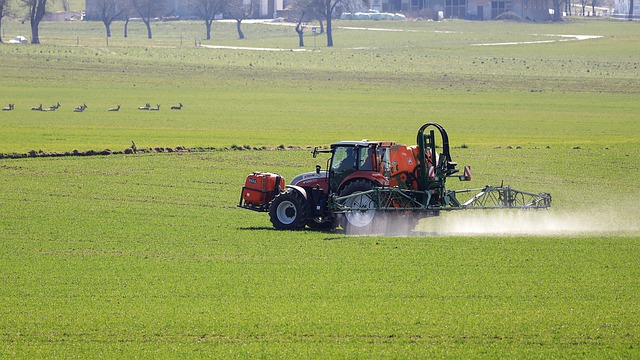
Herbicides They are chemicals that have selective or total phytotoxic action on unwanted plant species, such as weeds. The elimination of weeds is recommended, as they compete with plants grown by light, water, nutrients and space. Once in culture, weeds cause productivity and depreciate the quality of culture. There are various technological works for the control of weeds, such as soil works, ground milking and disinfection. An alternative method for the elimination of weeds is the application of herbicides, also known as herbicide.
The active substance in herbicides determines their toxic action. However, together with the active substance, other useful substances, such as solvents, stabilizers and adjuvants, are found in herbicides. These help substances have different roles in maintaining and increasing the effectiveness of the product. After application, the herbicide acts on the infesting herbs by inhibiting the vital processes, causing them so.
What types of herbicides are there?
Here are what types of herbicides exist:
- Pre -eering. It is applied before weeds and cultivated plants increase.
- Postemercenze. It is applied after weeds were increasing during their vegetation period.
- Contact herbicides. It is applied to the aerial parts of the plant. It acts only in the area and around the area where the herbicide was applied. These herbicides have maximum efficiency on annual weeds, as they have no energy reserves to help the system recover.
- Systemic herbicides. It is applied to the aerial parts of the plant. They are absorbed by the leaves and are subsequently translated throughout the plant.
- Residual herbicides. It is applied to the ground and acts on the seeds of the weeds that are in progress or penetrate the roots and act at their level.
- Selective herbicides. These herbicides eliminate only some categories of weeds, such as monocotyledone or dicotyledon, annual or perennials. It does not affect the crops for which the herbicide used is approved.
- Total herbicides. They are not selective and remove both weeds and any other system existing on the surface on which they are applied.
How is the application of herbicides reach?
The herbicide can be done on the ground or leaf. The right herbicides are chosen according to the herbicide method. Some aspects are taken into consideration, such as the application time, the method of action and the spectrum of the action. Depending on these aspects, there is herbicide:
- After the application time: pre -emerging herbicide and post -emerging herbicide
- By mode of action: herbicide with contact herbicides, systemic herbicides or residual herbicides
- For action spectrum: selective or total herbicide.
How is the herbicide performed on the ground?
The herbicide on the ground is performed in pre -emergency and residual herbicides are used. The roots of the hesitatives on the rise take control of the active substance in the herbicide and therefore directly stop the development of their respective weeds. When the herbicides are applied, the soil must be well supplied with water and well seasoned, so that the herbicide can be distributed evenly. If the soil is dry, herbicides lose their effectiveness.
How is the leaf herbicide reached?
The leaf herbicide is performed in post -emergency, using systemic, selective or total contacts or herbicides. Herbicides enter the plant through the leaf, in particular. Contact herbicides are translated into the small part and act mainly in the area or around the area in which they have been applied. Systemic herbicides are detected by the leaf and subsequently translated, especially through the vascular system throughout the plant.
Contact herbicides have a shorter action time than systemic herbicides, but systemic ones have greater effectiveness, because systemic herbicides act at the level of the entire system.
Recommendations on the application of herbicides
In order to obtain the desired effect by following the herbicide, it is recommended to respect the recommended temperature intervals for the application, as well as the optimal time of application, which correlates with the vegetation phase of the weeds and cultivated plants.
The application of herbicides is not advisable to be performed in periods with strong winds, in order to avoid environmental pollution. Furthermore, it is not performed during the periods followed by rainfall, to ensure the efficiency of the treatment.
What safety rules should be respected when weep herbicides?
Since herbicides are toxic substances, when applying herbicides some safety rules must be followed. Here are these:
1. Buy herbicides only from authorized places and in approved doses. The use of products of this type from unsafe sources can endanger both the health of consumers and the crops on which they are applied.
2. Read carefully and respect the indications on the product label and the storage measures after use.
3
4. Clean and calibrate the application equipment correctly.
Conclusion on the application of herbicides
The application of herbicides has the role of protecting the crops of weeds. However, to have the expected effect, it is necessary to take into account the type of existing herbicides, of the moment of application, as well as some rules relating to the application of herbicides.
latest posts published

Thyme – Everything you need to know about Timo

Modern agriculture with the help of industrial drones

Lavender culture. Rules of treatment to obtain a rich harvest

What are the machines that serve to alleviate agricultural work?

What prevention methods should you apply when using the total herbicide?

How many types of fertilizers are there and when do you have to use them?

The complete guide to the preparation of the garden in the cold season

The main agricultural works in July

Fodder Beet – Everything you need to know about its cultivation
