
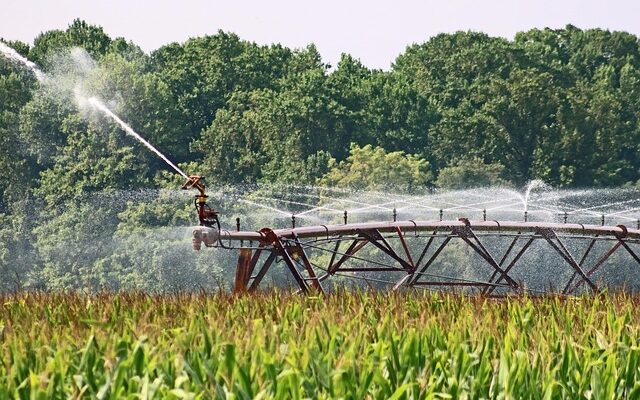
corn It is one of the most important agricultural cultures in Romania, but also one of the most sensitive to water deficit. The correct and efficient irrigation can make the difference between an average and exceptional harvest. In an agricultural context marked by climate changes, prolonged drought periods and increasing costs with resources, irrigation optimization becomes essential for the profitability of the corn harvest. In this article, we present the most effective strategies and recommendations to intelligently manage the irrigation of corn and obtain superior and higher quality productions.
Why is irrigation in corn culture important?
The corn has a high water consumption, especially in the critical development phases. A water deficit in periods such as flowering, fertilization or filling of cereals can drastically reduce production.
The needs of corn, on average, about 450-600 mm of water during the cycle of vegetation and in the absence of regular rainfall, the irrigation intervention becomes vital.
Critical irrigation phase in the development of corn
Not all phases of development of the plant are equally sensitive to the lack of water. Here are the key moments in which irrigation is absolutely necessary:
1 ..
This phase prepares the plant for the formation of inflorescences and determines the collection potential. A water stress at this stage reduces the number of grains on the pike.
2. Florving
It is the most sensitive phase for the lack of water. The irrigation at this moment helps to polish effectively and completely form the format.
3. The formation and filling of cereals
Ensure a sufficient amount of water during this period maximizes the weight of the cereals and the quality of the harvest.
What irrigation methods are the most effective for corn?
1. Irrigation for sprinkling
It is the most used method in Romania. It can be mobile or fixed and provides relatively good check on the volume of water. However, it can be ineffective under a strong wind or intense evaporation.
2. Driving irrigation
An increasingly used solution in modern farms. Allows the precise application of water directly to the root and can be combined with fertilization. Although the initial costs are higher, long -term efficiency and economy are clearly higher.
3. Irrigation by Solrows
Rarely used today, it is suitable for small slopes and clayey soils. It is less effective in terms of water consumption.
How is the water requirement for the irrigation of corn?
For effective irrigation, it is essential to know when and how much to irritate. Modern methods include:
- Humidity sensors in the soil: provide real data on the water level available in the ground.
- Local weather stations: they help monitor rainfall and evaporation.
- Modeling of evapotranspiration (etc.) – a precise calculation that shows how much water loses the plant by sweating and how much it must be compensated by irrigation.
Frequent errors in the irrigation of corn
There are also some common mistakes that beginner farmers can make in the irrigation of corn. Here are these:
- Irrigation too early or too late can lead to loss of water or reduce production potential.
- Excessive irrigation: it promotes the development of diseases and affects the soil.
- The uniform application on irregular soils of soil to iirrigate and not very irrigated areas.
- The lack of soil humidity monitoring – makes irrigation decisions based on intuition, not on real data.
Recommendations to optimize the irrigation of corn
Here are some tips to help you optimize the irrigation of corn, then get a rich and healthy harvest, even if you are a farmer for beginners:
- Invest in monitoring irrigation and automation technologies.
- Choose irrigation methods adapted to the type of soil and topography of the soil.
- Correlates the irrigation with fertilization for a synergistic effect.
- Suitable the irrigation program according to the vegetation phase of the plant.
- During hot periods, wet in the morning or evening to reduce losses by evaporation.
In the end
The irrigation of corn means not only applying water on the field, but it is a complex agricultural strategy that involves observation, analysis and adaptation. Through efficient management of water resources and through the use of modern technologies, it is possible to transform irrigation into a tool to increase productivity and protect your investment. With optimized irrigation, the corn has any possibility of reaching the maximum production potential, regardless of the whims of time.
latest posts published

Thyme – Everything you need to know about Timo

Modern agriculture with the help of industrial drones

Lavender culture. Rules of treatment to obtain a rich harvest

What are the machines that serve to alleviate agricultural work?

What prevention methods should you apply when using the total herbicide?

How many types of fertilizers are there and when do you have to use them?

The complete guide to the preparation of the garden in the cold season

The main agricultural works in July

Fodder Beet – Everything you need to know about its cultivation
