
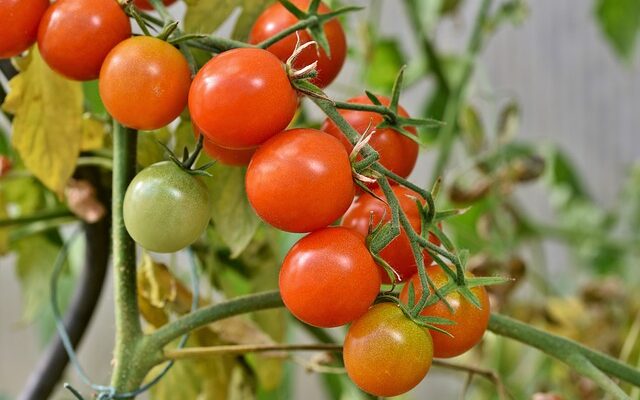
What are the advantages of a harvest on small surfaces
Even if you have a land with a small surface, you can take advantage of it so that you bring substantial profits. There are some profitable crops on small surfaces. Even if you have only a few hectares, you can have important earnings from agricultureIf you turn your attention to these profitable cultures. Some of them are Cătina, Lavanda and Rhobarb, but there are others. In this article you will discover which of the main ones Profitable crops on small land. With only a few ideas of profitable crops, you can get a profitable and promising activity, even if you have an area of up to 5 hectares.
There are also some advantages of a harvest on small surfaces. First of all, the initial investment is smaller when you have a small surface. In addition, on a small surface it is easier to make a strategy for the management of the activity and for the sale of products.
A limited surface is ideal for testing a new activity, a niche, which is why small areas are often preferred by farmers, in particular those who are at the beginning of the street.
However, it is good to know that none of the profitable crops on limited surfaces has profit from the first year. In general, these cultures require 2-3 years to depreciate the investment and only then can you talk about profit. However, they represent some of the fastest ways to have a safe long -term profit.
On small surfaces, the most profitable crops are niche. Before choosing a certain culture, it is essential to consider what are the areas in which the respective culture can be used, what are the requirements of culture in terms of environmental factors, as well as if plants can develop correctly in the conditions offered by your land.
Subsequently we show you what are the main profitable crops on small areas.
Profitable cultures n. 1: Goji
Goji's fruits have become increasingly popular and appreciated in recent years. It is consumed dehydrated and used in natural medicine and cosmetics. In our country, they have started to be cultivated for a relatively short time, adapt well and can bring great profits with a minimum of effort and investments.
Goji is planted on permeable land and in sunny areas. 3000-3500 shrubs are requested in a hectare. It is planted at a distance of 1.5-2 m between files and semi-intense crop 2-2.5 m remains between the files. The recommended period for sowing is the beginning of autumn or spring. He begins to flourish in May and fruit holder from June to October-November. Goji is a plant sensitive to extreme temperatures. However, it lasts up to -25 degrees Celsius and up to +40 degrees Celsius. During the summer, 2-3 irrigation per month are needed and herbicide is required.
Profitable cultures n. 2: Cătina
The fruits of Cătin are increasingly used in alternative medicine, thanks to their high content of vitamin C. it is often consumed with honey, but they can also the basis of medicinal products, such as tea, dyes, syrups and ointments.
Cătina resists very well at low temperatures and even frost, as well as at heat temperatures. It requires a lot of light and in the first 2 years after the establishment of the plantation it also needs irrigation. Once the plant develops and passes the first two years from the institution of culture, it resists well and drought. It develops well on almost all types of soil, which can be cultivated both in the plains and in the areas of Sottocagna. It is recommended to avoid Caina's cultivation on heavy soils and without drainage.
The dog is collected at the end of September – the first decade of October, depending on the color and variety. Collection is one of the most difficult phases of the cultivation of the country and is performed manually, mechanized or semi-mechanized.
Profitable cultures n. 3: Aronia
Aronia is easy to grow and maintain shrub, as it has no very large soil requirements and is frost resistant. It is planted late autumn or early spring. It is a plant that loves humidity and water requirement is the largest during the growth of the fruits, that is, in May-June. If the plantation is well maintained, it can be exploited up to 15-20 years.
The fruits of Aronia are small and black and reach the cooking maturity at the end of August. If the weather is not in favor of the collection, the collection period can be extended up to 4-6 weeks.
Profitable cultures n. 4: Topinambur
Superinambur, known in the popular name like a nap, deserves all your attention, if you have a limited surface. It is increasingly appreciated by people interested in natural medicine.
Jerusalem artichoke is planted at the beginning of autumn or spring, on a well -reduced land. Sowing is performed at a distance of 30-50 cm between the plants and 70 cm between the files. It requires a lot of water, therefore it is essential that good irrigation of the soil has a high production.
Profitable cultures n. 5: purple potato
The purple potato is also a niche culture that is worth considering for a small surface. It is a rather rare culture in our country, as well as in the world, which is why the purple potato has a high sale price.
The preparation of the land begins in the autumn, with the administration of fertilizers and plowing. In spring, before planting a few days, the earth is well destroyed. Sowing is performed mechanized, at a distance of 20-25 cm between the plants and 60-70 cm between the files. Two days after sowing, the earth is herbicide. After the potatoes begin to rise, mushrooms and insecticides are administered, in particular against the cockroach of Colorado. The collection takes place about 5 months after sowing.
Profitable crops n. 6: Raspberry
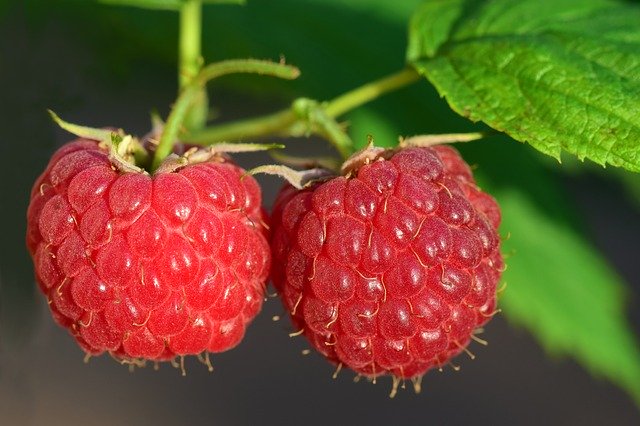
Raspberry It is one of the most appreciated berries. If you have a limited and cultivated raspberry surface, this culture can prove to be profitable shortly after its institution and, in the long term, can become a profitable business.
Raspberry is grown on sunny lands, far from strong winds and cold temperatures. It develops well on clayey and well drained soils. It is recommended to grow raspberries after the pious cereals or after legumes.
It can be planted in autumn or spring, at a distance of 2.5-3 meters between the files and 0.4-0.6 meters between the plants. Lamponi crops require fertilization. Summer is required 1-2 irrigation per week on heavy land and 2-3 irrigation per week on light land.
The raspberry is collected when the fruits become red and soft. Not being a resistant fruit, maximum 5 days are maintained, even in the refrigerated warehouses. It can be frozen, in which case it resists a few months.
Profitable cultures n. 7: walnut
Walnut is a species with high longevity. It is among the species with the highest requirements of light. It grows and is satisfactory only in areas with an average annual temperature of 8-10 degrees Celsius, with the average temperature of 20-22 degrees hottest and delicate winters, in which the coldest temperature is -1-2 degrees Celsius. The nuts are harmful to walnuts above 35 degrees Celsius, as well as low temperatures, -25 or -36 degrees Celsius. It grows and fruit well in areas where total annual rainfall of 600-700 l/m2.
Profitable cultures n. 8: Lavender

Also called «Purple Gold», lavender It has become increasingly sought after in recent years. It is used for tea, creams, perfumes, room smells and cars, repellents for moths and others.
Lavender is planted in autumn or spring, on a sunny and well drained land. It is a plant that resists well at extreme temperatures, even to frost -20 -20 -30 degrees Celsius. Irrigation is performed dripping and it is essential that the water does not move on the ground, otherwise lavender rot. Lavender culture also requires herbicide treatments, but does not require fungicides or insecticides.
Profitable cultures #9: bitter cucumber
Bitter cucumber recalls cucumber, but has particular requirements in terms of environmental factors. It can bring much higher profits of the classic cucumber culture. The culture of bitter cucumber does not resist well at temperatures lower than 3 degrees Celsius. It develops better at temperatures of 22-30 degrees Celsius. It has great water needs and it is recommended that the ground is maintained permanently. The bitter cucumber seedlings are planted at a distance of 15 cm between files and 40 cm between the plants.
Profitable cultures n. 10: Bame
Bams have become increasingly used in kitchens, due to many health benefits. The seeds are resembled the second half of May, when the temperature during the day is about 20 degrees Celsius and there is no risk of frost and frost. It looks like two rows of plants at a distance of 30-40 cm between the files and 40-50 cm between the plants. Bams need a lot of water and heat to develop correctly.
Conclusions
So even if you have a limited surface, you can develop a profitable culture. These are only ten of the most profitable crops that you can consider for your land.
latest posts published

Thyme – Everything you need to know about Timo

Modern agriculture with the help of industrial drones

Lavender culture. Rules of treatment to obtain a rich harvest

What are the machines that serve to alleviate agricultural work?

What prevention methods should you apply when using the total herbicide?

How many types of fertilizers are there and when do you have to use them?

The complete guide to the preparation of the garden in the cold season

The main agricultural works in July

Fodder Beet – Everything you need to know about its cultivation
