
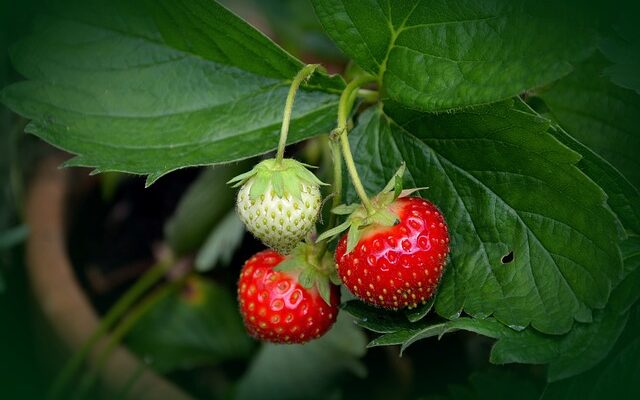
Cultivation of strawberries: what do you need to know
Strawberries are the first fruits that appear in spring. Their aroma is unmistakable and these fruits can be consumed in various forms. The strawberry is grown in Romania in most regions, both on small areas and on extensive areas. Among the areas where they are grown on extensive areas there are Satu Mare, Sălaj, Bihor, Arad and Dâcamovița. The culture of the strawberry is easy to plant, it is suitable for the hills areas and the production is quite large from the first year, being able to obtain about 20-25 tons/ha.
How strawberries are grown
To have a harvest of strawberries that will offer you the expected production and delicious fruit, it is necessary to take into account some recommendations on the cultivation of strawberries. Subsequently, we will show you how strawberries are cultivated, from the choice of the land for the culture of strawberries to maintaining culture.
Choose the ground to plant strawberry culture
Strawberries are plants that love the sun abundantly. Therefore, the best place for strawberry culture is the one in which the sun is at least 6-7 hours a day. Once established, strawberry culture can be maintained for 3-5 years. The rotation of crops plays an important role in terms of strawberry culture. How we recommend strawberries, as well as strawberries, cabbage, carrots and cereals. If in the last 4 years tomatoes, potatoes, peppers or aubergines have been grown on the ground that you want to cultivate strawberries, it is necessary to apply insecticides to combat parasites in the ground.
What kind of soil and humidity do they prefer strawberries?
Strawberry is a plant that prefers wet soils, loose and with a high content of organic matter. In addition, the ground must slightly absorb the water and be well drained. It also prefers a higher pH soil, between 5 and 7. However, to maximize production, it is recommended by land with a pH between 5.8 and 6.2.
To develop in optimal conditions, strawberries need wet ground. Drop irrigation is recommended during rains without rain. The strawberries must be watered for the entire vegetative cycle, from flowering to the end of the harvest. Particular attention is paid to irrigation in the drought period from August and September.
The wet ground layer must be 2-3 centimeters. However, excess humidity must be avoided, since the roots of the strawberries are not deeply blocked in the ground and too much water could cause their putrefaction and the soil too dry could let them dry.
How to prepare the earth to plant strawberries?
Before planting strawberries, make sure the earth is adequately prepared. This involves well attached ground, with enough humidity and weeds. The plow is performed at a depth of about 30 cm. It is also the right time for fertilization. For this, manure and chemical fertilizers are used.
What are the methods for planting strawberries?
The strawberries are rarely planted with the help of the seeds. On the contrary, the strawberries are used for garden crops and for the fields, i.e. rooted plants.
Plant strawberries
To plant strawberries in the form of seedlings, a pit is carved about 15-20 cm depth, depending on the length of the root. So the plants are inserted in the pit, they are covered with soil and jokes. Avoid its positioning too deep in the ground, so as not to rot. The ideal position of sowing seedlings is the one in which only the root is covered by the ground, not by the stem. The distance between the lines must be 60-100 cm and the distance between the plants on the same row must be 20-25 cm.
Plant strawberry stolons
Stoloni with strawberry are planted following the same basic rules that follow and to plant strawberries, with some characteristics, as follows:
- Stoloni sit in the pit perfectly vertical, at a sufficient depth to keep the growth gems over the ground
- The earth around the stolons is beaten to increase the surface adhering to the roots of the plant
- If the earth is not quite wet, the stolons must be high. This procedure provides for the sinking of stolons in a mixture of soil, water and manure. Through this technique, earth particles are more easily fixed.
- Another common practice is the modeling of the stolons, which means to remove dead leaves and filaments. In the case of this practice, only one or two leaves are maintained.
How to maintain the culture of strawberry
One of the most important phases in maintaining strawberry cultivation is irrigation. The best option is drop irrigation. It is essential to make sure to install irrigation pipes on the ground and keep the leaves and fruits from the drops of water. Strawberries require a lot of humidity, so that the irrigation of plants is a long -term process, which extends throughout the vegetative cycle.
Strawberries are small plants. For this reason, they suffer if they compete with weeds for water, light and nutrients. It is recommended to periodically dig the ground around strawberries, so that the water is more easily infiltrated. An effective solution to combat the appearance of weeds is mulching, which plans to cover the soil with a layer of plant material, with straw or with mulch.
Another important phase in maintaining the culture of strawberry is fertilization. This has an evident effect in the production and quality of the fruits collected. Fertilization is obtained along the entire vegetative cycle, from plantation to cooking. The chosen substances must be used by respecting the manufacturer's instructions, in the recommended quantities and at the right time. In the first phase it is possible to use a balanced fertilizer with equal parts of nitrogen, potassium and magnesium, which is added to the ground before planting strawberries. The second phase applies 4-6 weeks after sowing. Excess nitrogen is avoided in spring, as it can cause soft and sensitive fruits.
When strawberries are grown
The strawberries are not pretentious in heat and resist well and lower temperatures. The optimal temperatures for the cultivation of the strawberry are between 10 and 25 degrees Celsius. There are varieties of early, medium and late strawberries, depending on the period in which they reach maturity. The sowing period is also influenced by the type of crop, in protected spaces, such as greenhouses or solariums or on the field. Sowing can be performed:
- Spring – at the end of March – at the beginning of April
- Summer between June-July
- Autumn – Between 10 September to 15 October
When are strawberries collected?
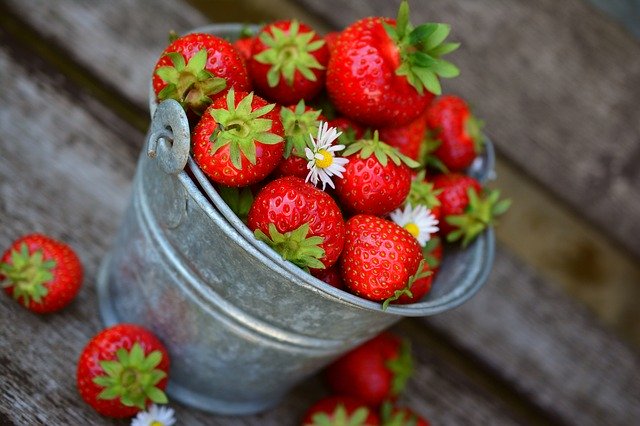
Strawberries are collected when they are well cooked. They should be carefully collected, because they are quite fragile and perishable. To resist longer, they must keep the tail after they have been collected. In addition, strawberries are not collected when they are wet if you want to keep them.
Diseases that can influence the culture of strawberry
Among the most common diseases that affect the culture of strawberry there are both specific diseases and diseases that affect vegetables or fruit trees. These are: gray rot, white spot, hand, strawberry flour, wet rot and anthrachnosis.
In order to prevent the occurrence of these diseases, it is recommended to use phytosanitary treatments, following the instructions of the producers and in the quantities mentioned on the package. Fungicides are chosen so that they are suitable for each individual pathogen.
Parasites that can influence the culture of strawberry
There are many parasites that affect the culture of strawberry. Numerous insects are common with other fruit or vegetable shrubs. Among the most dangerous parasites of the strawberries are: the glitte black strawberry, the common mite, the strawberry machine gun, the hairy cockroach, the lice, the larvae of the May and the non -dwelling of the strawberries.
It is advisable to use insecticide To remove threats as soon as they appear. It is important to respect the recommended quantities of producers, as well as the application of insecticides, to have a healthy and powerful culture.
Strawberry culture in the garden
The strawberries are easily perishable fruits, so they should be consumed within a few days of the collection, when they are still fresh. They can be kept in the refrigerator for no more than a week, but it is better kept in the freezer, where they can be kept for no more than six months. A good long -term storage solution is the processing, that is, transforming strawberries into jam, sweetness or composed. They can be maintained during the year.
Protecting the culture of strawberry in winter is important. In regions with delicate winters, strawberries do not require special protective measures during the cold season. In areas where temperatures fall drastically in winter, a further layer of celled on strawberries is applied.
The optimal period for the addition of the additional mulch layer is the beginning of December, when the plants entered the hibernation. It is possible to apply a layer of 2-3 centimeters of straw or pine needles. Pacciami containing seeds of plants, sawdust or leaves are not used, because they are denser and can suffocate plants.
The benefits of strawberry consumption
The strawberries are famous for their unmistakable taste and their special aroma. Furthermore, however, these fruits also have many benefits, with a high content of vitamins and minerals, such as vitamin C and K, potassium, manganese, magnesium and foals. The strawberries are rich in fiber, have few calories and contain antioxidants and polyphenols. A cup of strawberry has only 49 calories, 3 grams of fiber and 12 grams of carbohydrates.
Strawberries have a high level of antioxidants benefits for the heart, such as elagic acids and anthocyanin. These phenolic compounds reduce the risk of cardiovascular diseases and prevent the formation of dangerous cholesterol. Furthermore, vitamin C, fibers and follars help to reduce cholesterol levels in the arteries.
Culture of Strawberry – Conclusions
It is easy to set up a strawberry culture right in the garden. Not being an extremely demanding plant, it can be grown in any region of the country. Take into account our advice and you will create a culture that can profit from the first year.
Photo source: pixabay
latest posts published

Thyme – Everything you need to know about Timo

Modern agriculture with the help of industrial drones

Lavender culture. Rules of treatment to obtain a rich harvest

What are the machines that serve to alleviate agricultural work?

What prevention methods should you apply when using the total herbicide?

How many types of fertilizers are there and when do you have to use them?

The complete guide to the preparation of the garden in the cold season

The main agricultural works in July

Fodder Beet – Everything you need to know about its cultivation
